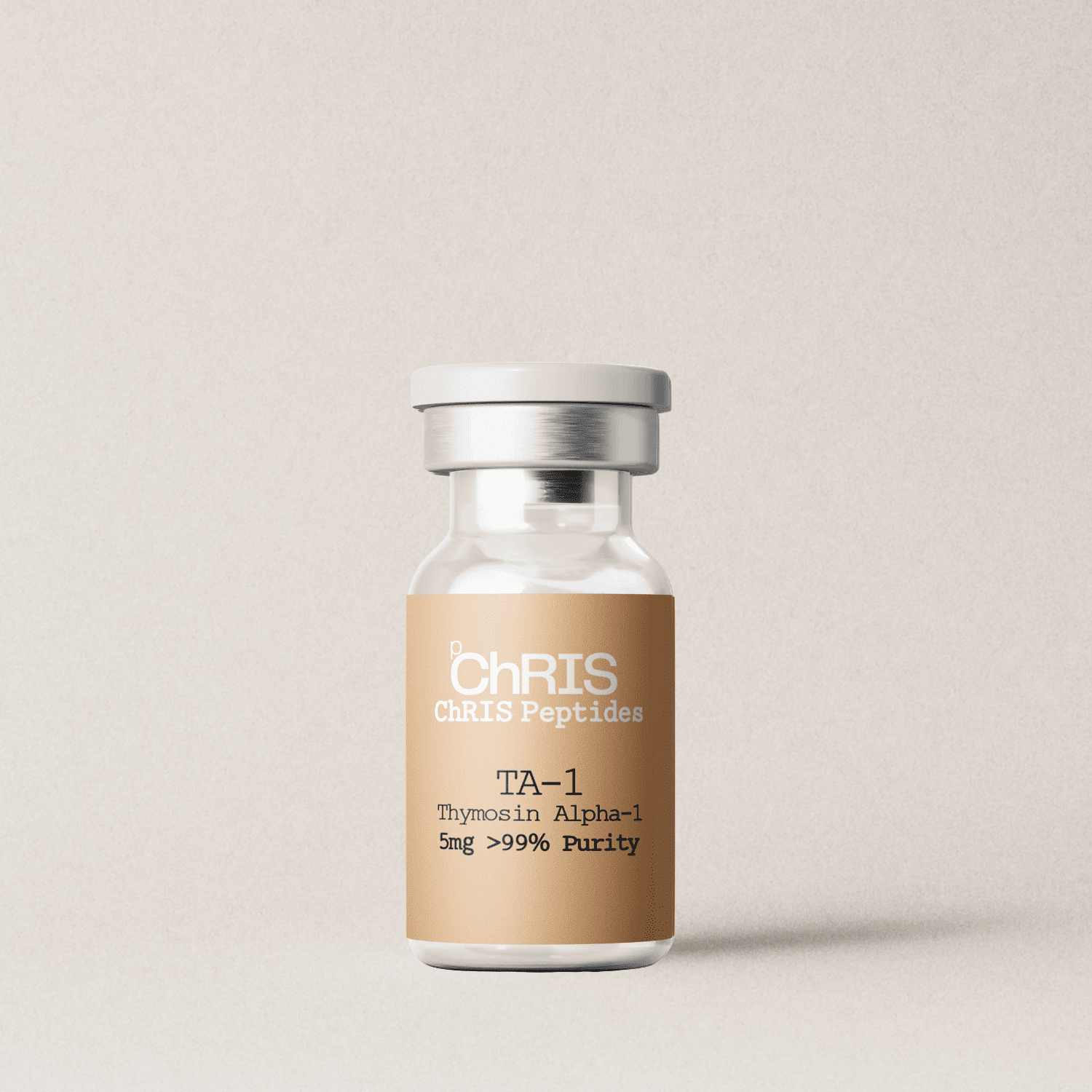
| Thymosin Alpha-1 (C₁₂₉H₂₁₅N₃₃O₅₅) is a synthetic 28-amino acid peptide originally isolated from thymic tissue. It acts as an immune modifier and is structurally identical to the native protein responsible for restoring immune system homeostasis.
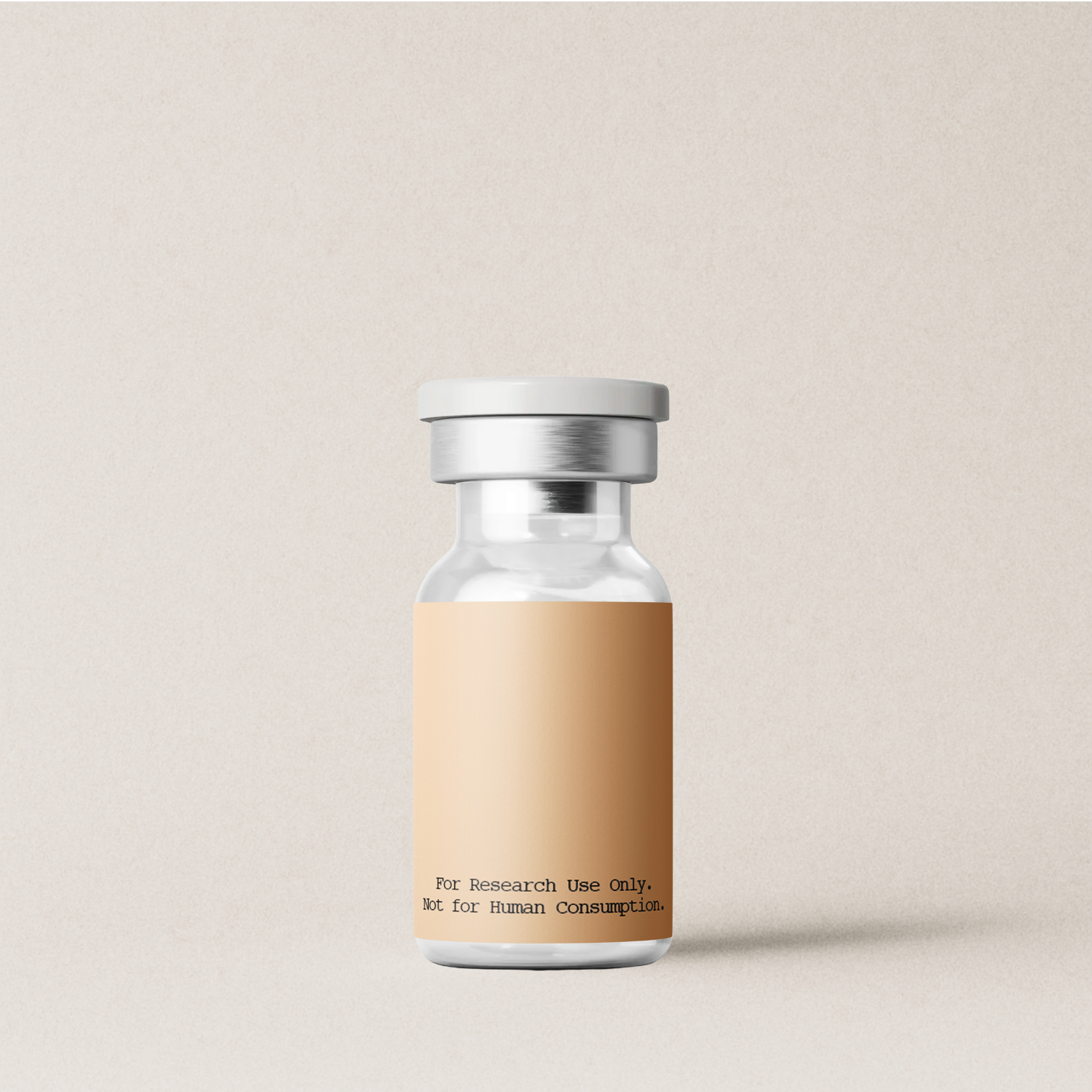
In research models, TA-1 is utilized to study the maturation of T-cells, the modulation of cytokine expression, and the enhancement of major histocompatibility complex (MHC) class I surface markers. It is frequently employed in investigations regarding immune senescence, oxidative stress resistance, and the regulation of effector cell activity. Supplied in a 3 mL vial as a lyophilized (freeze-dried) powder requiring reconstitution with a laboratory diluent. For laboratory research use only. Not for human or veterinary consumption. |
Thymosin Alpha-1 (TA-1) ― 5mg
$60.00
20 in stock
RELATED PRODUCTS
AOD-9604 5mg
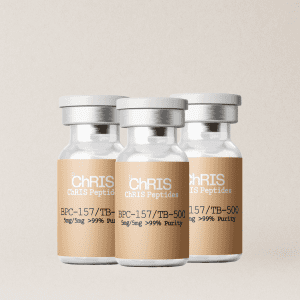
BPC-157 5mg + TB-500 5mg (3 Pack)
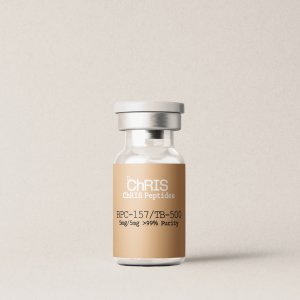
This formulation is a combined research blend consisting of BPC-157 (C₆₂H₉₈N₁₆O₂₂), a partial sequence of body protection compound, and TB-500 (C₂₁₂H₃₅₀N₅₆O₇₈S), a synthetic fraction of the protein thymosin beta-4The combination is designed to investigate potential synergistic mechanisms in soft tissue repair models. In experimental settings, these peptides are studied for their distinct but complementary roles in angiogenesis, actin sequestration, and cellular migration. Research applications focus on the acceleration of tendon and ligament healing pathways, reduction of inflammatory markers, and cytoprotection within musculoskeletal systems.
Supplied in a 3 mL vial as a lyophilized (freeze-dried) powder requiring reconstitution with a laboratory diluent. For laboratory research use only. Not for human or veterinary consumption.
CJC-1295 (No DAC) ― 2mg
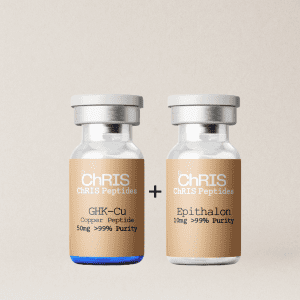
GHK-Cu ― 50mg + Epithalon ― 10mg
GHK-Cu (C₁₄H₂₄N₆O₄·Cu²⁺) is a copper-coordinated peptides complex formed from the tripeptide Gly-His-Lys chelated with divalent copper ions. In laboratory research, it is examined for its involvement in extracellular matrix dynamics and peptides-mediated cellular signaling processes. Experimental studies have shown that GHK-Cu influences collagen-related pathways, gene regulatory activity, and copper-dependent redox systems, making it a useful reference compound for research into tissue remodeling, metalloprotein interactions, and regenerative biochemical mechanisms.
Epithalon (C₁₄H₂₂N₄O₄) is a synthetic tetrapeptide composed of the amino acid sequence Ala–Glu–Asp–Gly and is studied in laboratory research as a derivative of endogenous thymic peptides systems. Experimental investigations have associated this peptides with regulatory activity related to telomerase-associated processes, oxidative balance, and circadian gene expression through pathways linked to pineal peptides signaling. As a result, Epithalon is commonly employed as a reference compound in studies focused on genomic integrity, epigenetic regulation, and neuroendocrine peptides signaling mechanisms.
Both are supplied in individual 3 mL vial as a lyophilized (freeze-dried) powder requiring reconstitution with a laboratory diluent. For laboratory research use only. Not for human or veterinary consumption.
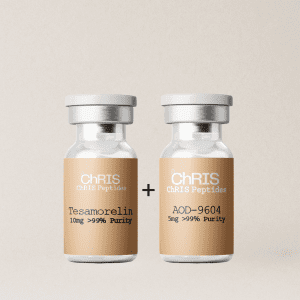
Tesamorelin ― 10mg + AOD-9604 ― 5mg
Tesamorelin (C₂₂₁H₃₄₂N₆₂O₆₇) is a chemically modified synthetic analog of growth hormone–releasing hormone (GHRH 1–44) that incorporates a trans-3-hexenoic acid substitution to improve molecular stability. In experimental models, it interacts with GHRH receptors and is used to study mechanisms related to growth hormone production and release. As a research compound, tesamorelin is commonly applied in investigations of peptide–receptor interactions, kinetic stability, and regulation of the somatotropic axis within endocrine and metabolic systems.
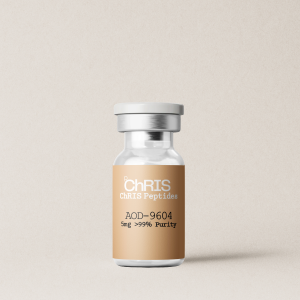
AOD-9604 is a peptides fragment originates from residues 177–191 of the human growth hormone sequence and is examined in research for metabolic pathway activity that does not involve IGF-1 signaling. Laboratory studies indicate its effects are associated with regulation of lipid and glucose metabolism, with mechanistic links to β-adrenergic pathways and AMPK-related signaling. It is therefore used as an experimental tool in studies of cellular energy balance, adipocyte development, and metabolic pathway regulation.
Both are supplied in individual 3 mL vial as a lyophilized (freeze-dried) powder requiring reconstitution with a laboratory diluent. For laboratory research use only. Not for human or veterinary consumption.